The best USB hubs depend on what you need to connect: a laptop dock with display and charging support, or a simple way to add more USB ports. These picks cover both, so check your device’s port type and the hub’s mix of data, video, and power connections before choosing.
Quick Top Products
SABRENT USB-C Hub & SSD Enclosure (HB-6PNV)
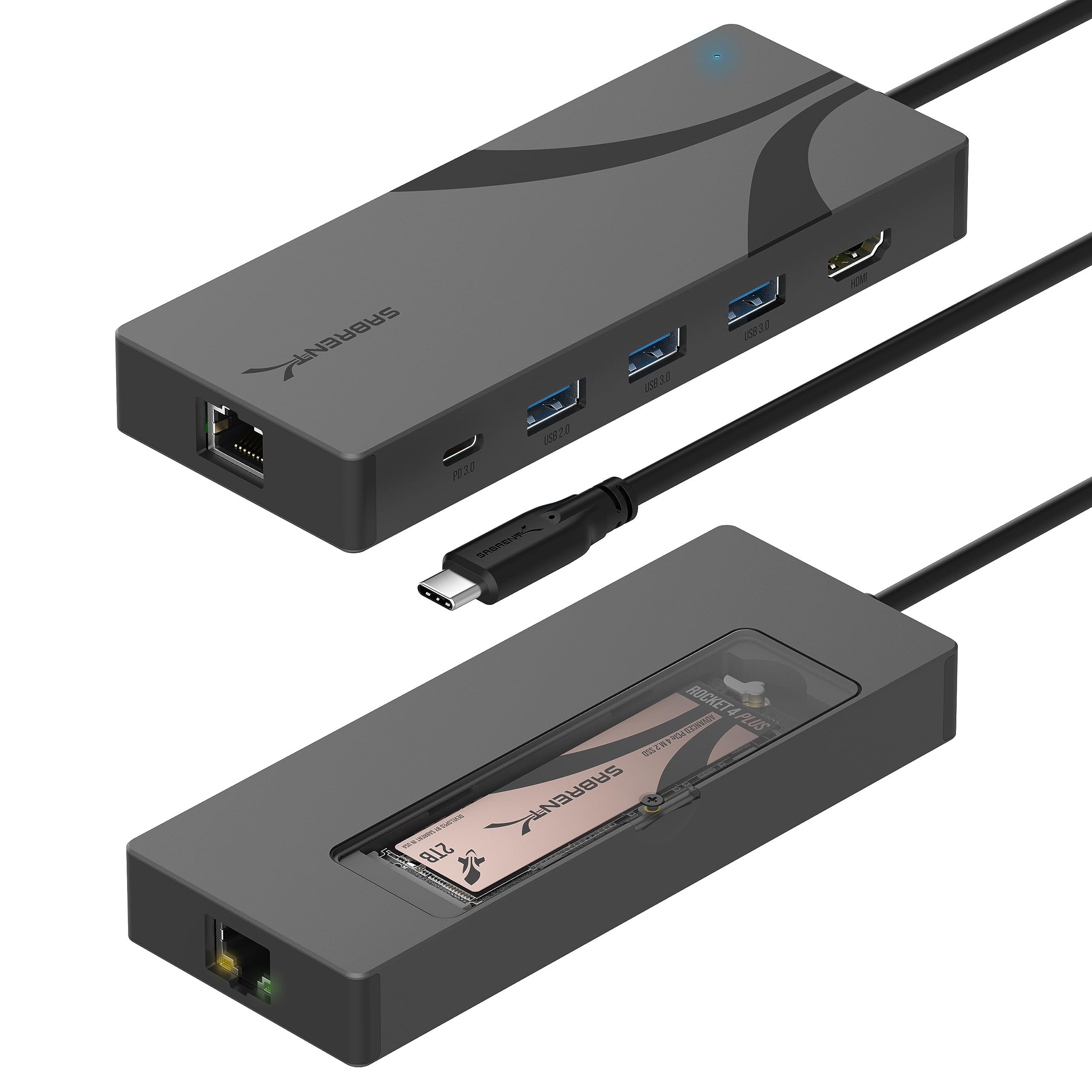
- Adds HDMI, Gigabit Ethernet, three USB-A ports, and an M.2 SSD slot.
- Supports up to 90W power delivery and a 10Gbps USB-C connection.
- Works with Windows, macOS, and Linux devices.
Best For: Laptop users who want display output, wired networking, and an internal SSD slot in one travel hub.

SmallRig 4-in-1 USB-C Hub 4598
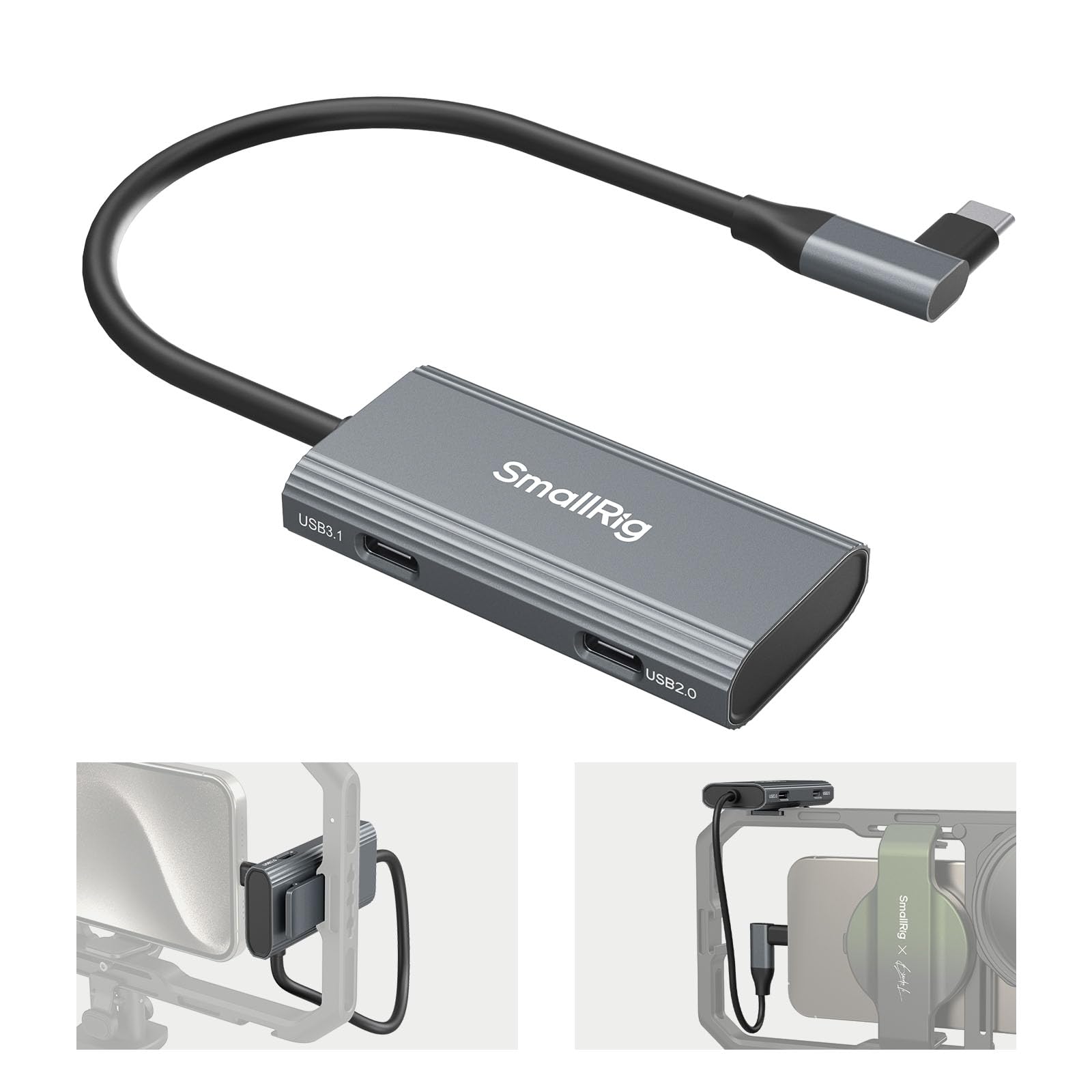
- Has a PD charging port, USB-C 3.1, and two USB-C 2.0 interfaces.
- The USB-C 3.1 port supports transfers up to 10Gbps.
- Includes a cold shoe mount for attaching to camera gear.
Best For: Mobile video creators who need USB-C ports, audio connections, charging, and a cold shoe mounting point.
j5create USB-C Multi-Port Hub (JCD373EC)
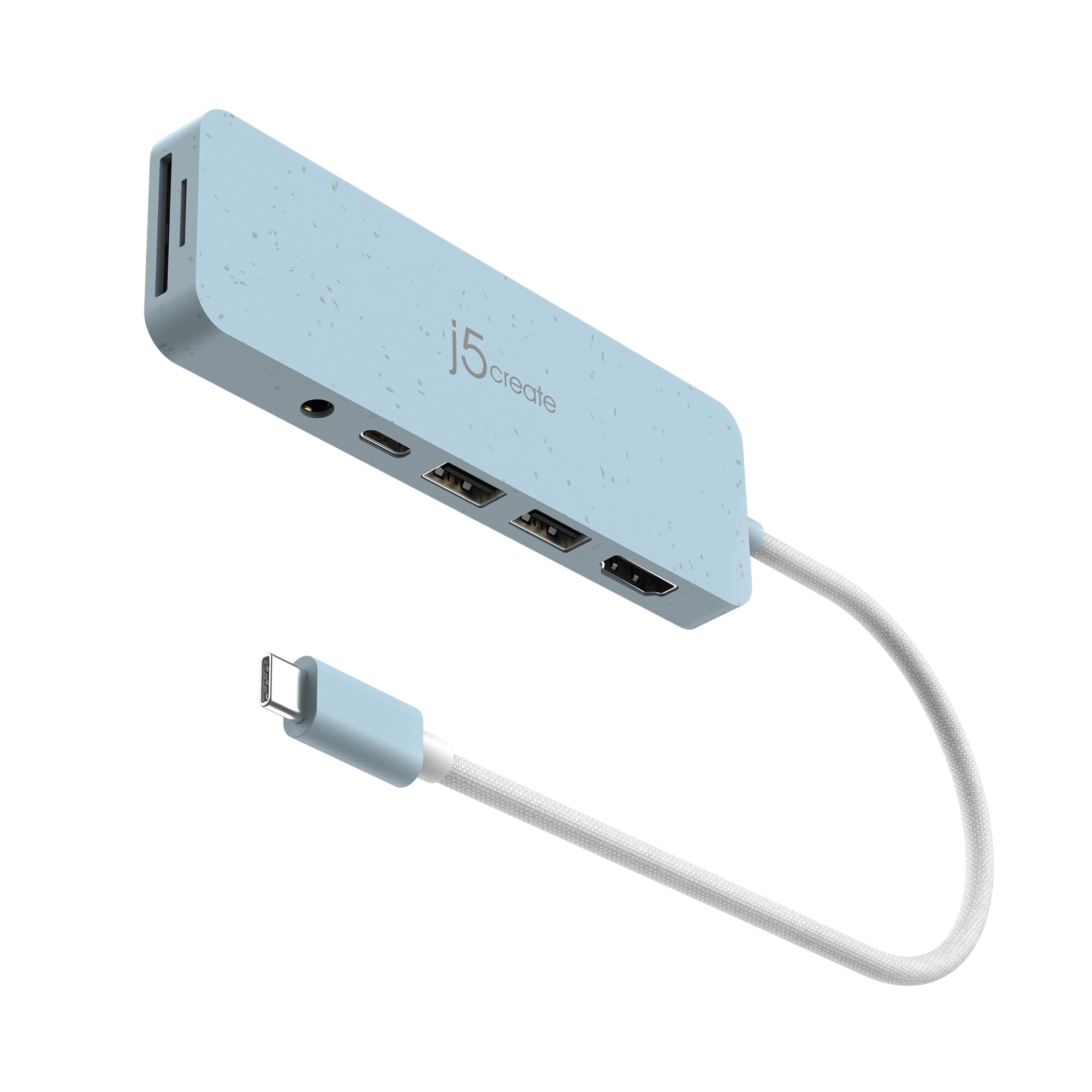
- Combines two USB-A ports, HDMI, audio, SD/microSD readers, and 100W PD.
- HDMI supports up to 4K at 30Hz.
- Its plug-and-play design supports a wide range of devices.
Best For: Laptop and tablet users who need HDMI, USB-A, card readers, audio, and USB-C charging in one adapter.
SABRENT 5-in-1 USB-C Hub (HB-TG5P)
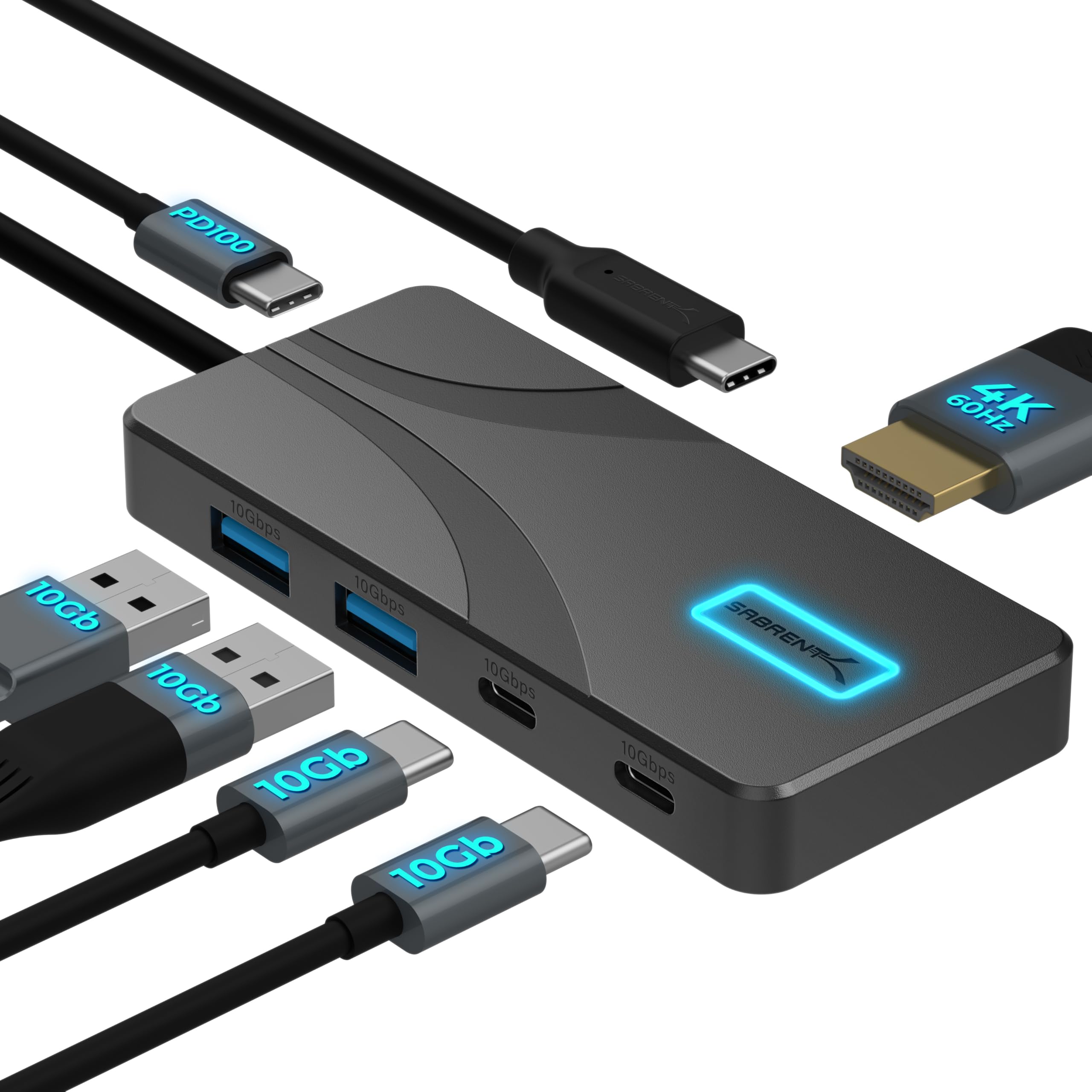
- Offers two USB-A and two USB-C data ports at up to 10Gbps.
- Supports HDMI output up to 4K at 60Hz.
- Passes up to 80W to a laptop from a connected 100W PD charger.
Best For: Laptop users who want multiple 10Gbps USB ports, 4K at 60Hz HDMI, and power pass-through.
Knox Gear Powered 4-Port USB 3.0 Hub
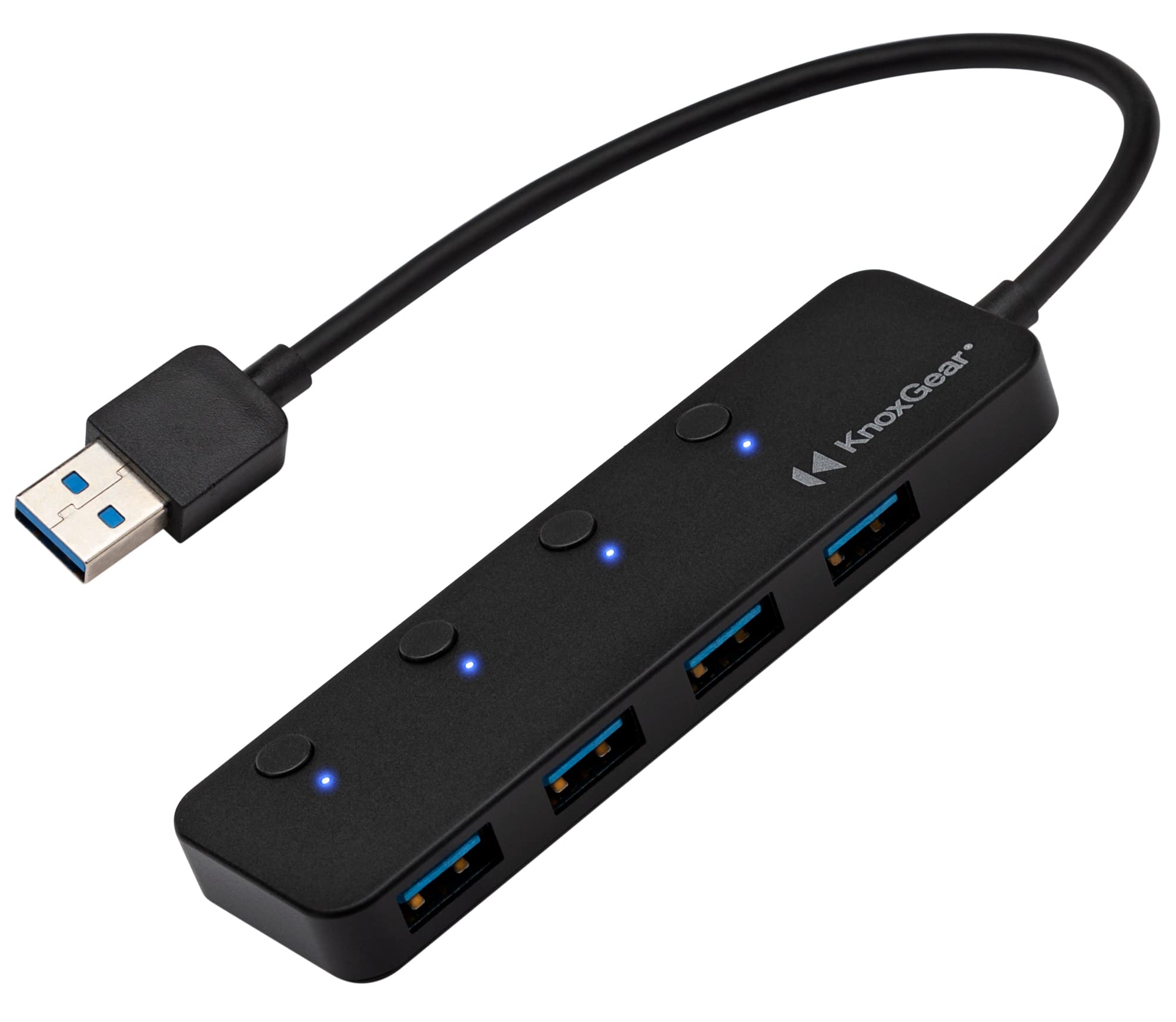
- Adds four USB 3.0 Type-A ports.
- Individual switches and LEDs let you control and check each port.
- Transfers data at up to 5Gbps with USB 3.0 devices.
Best For: Desktop and laptop users who want four USB-A connections with individual on/off switches.
SABRENT 4-Port USB 3.0 Hub (HB-UM43)
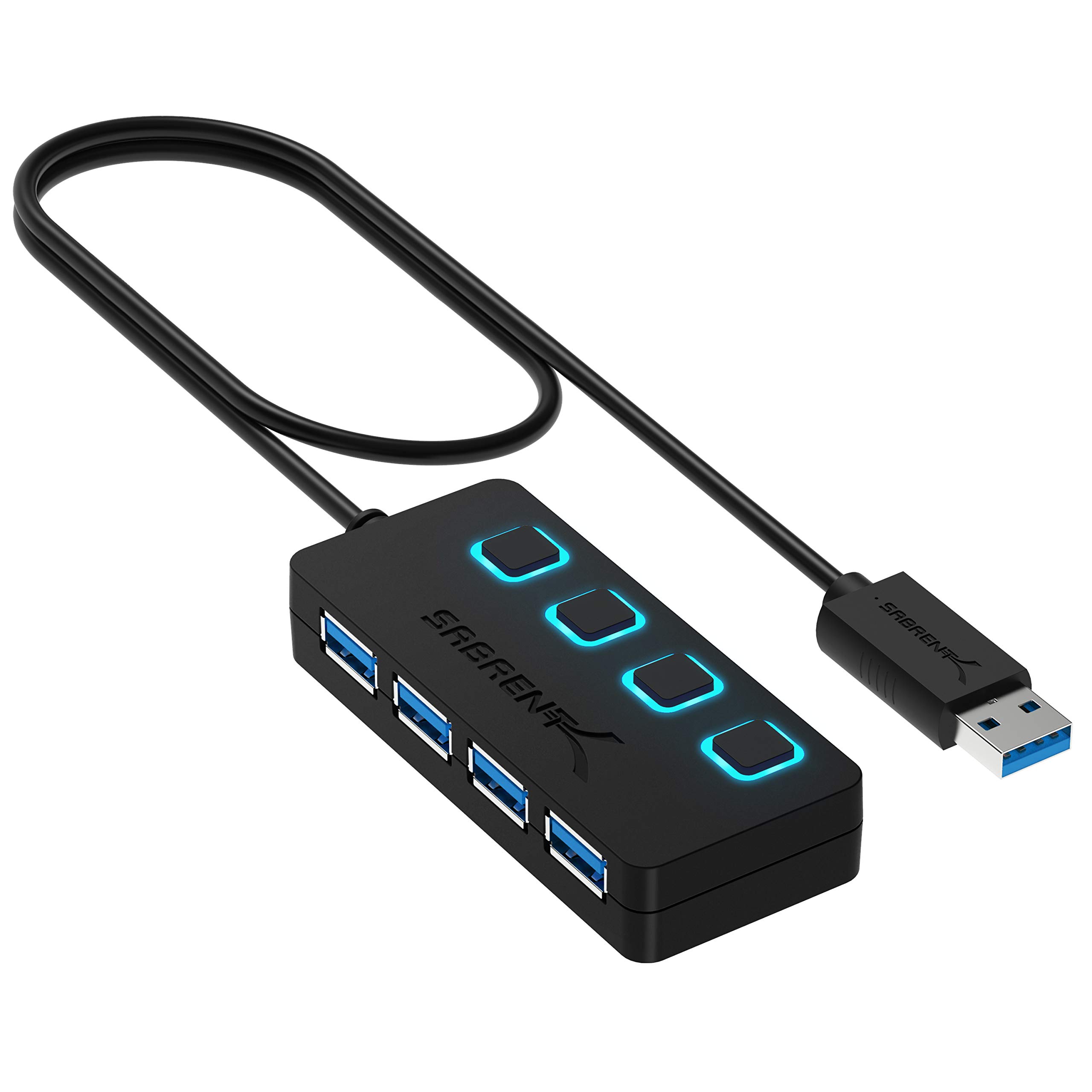
- Adds four USB 3.0 ports with a 2 ft cable for flexible placement.
- Has individual on/off switches and LED indicators.
- Supports data transfers up to 5Gbps.
Best For: Users who want individually controlled USB-A ports and extra cable reach from a computer.
SABRENT 4-Port USB 2.0 Hub (HB-UMLS)
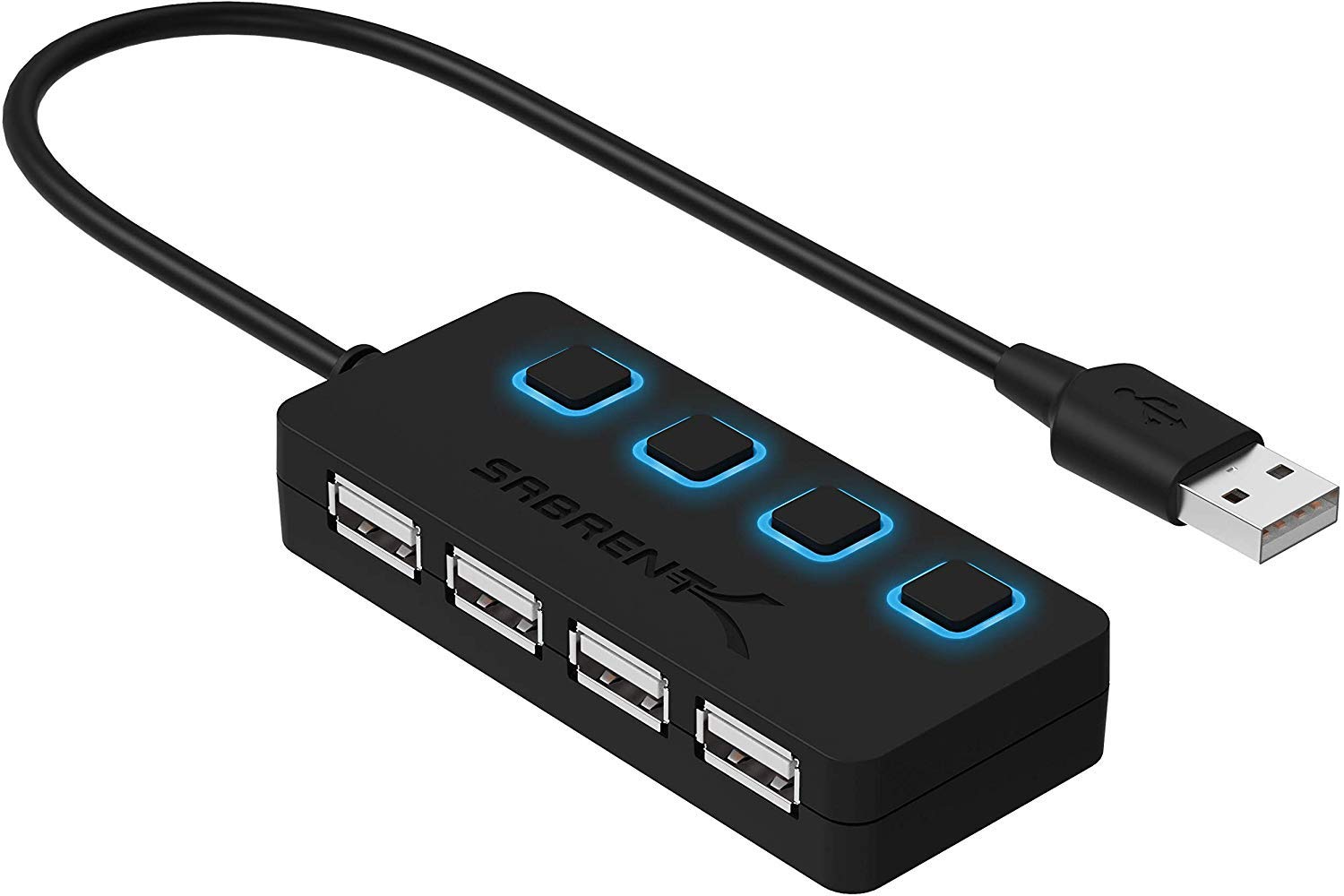
- Adds four USB 2.0 ports.
- Individual switches and LEDs provide per-port control and status.
- Supports transfer speeds up to 480Mbps.
Best For: Users connecting low-bandwidth USB peripherals who want four switched ports at a basic USB 2.0 rate.
SABRENT 13-Port USB 2.0 Hub (HB-U14P)
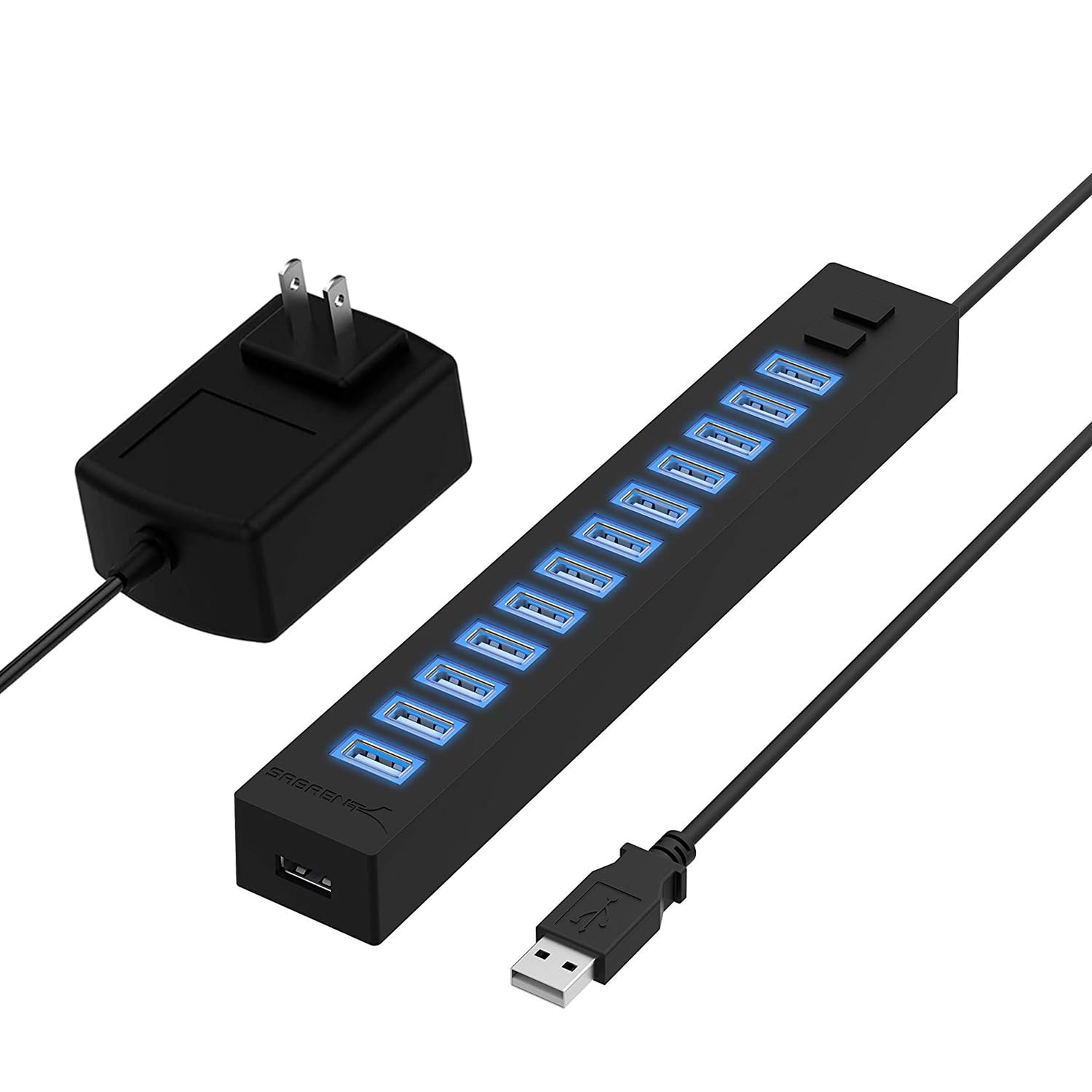
- Provides 13 downstream USB 2.0 ports.
- Supports USB 2.0 transfer rates up to 480Mbps.
- Supports plug-and-play and hot-swappable setup.
Best For: Desktop users who need to connect many USB 2.0 peripherals through one host connection.
SABRENT 10-Port USB 3.0 Hub (HB-B7C3)
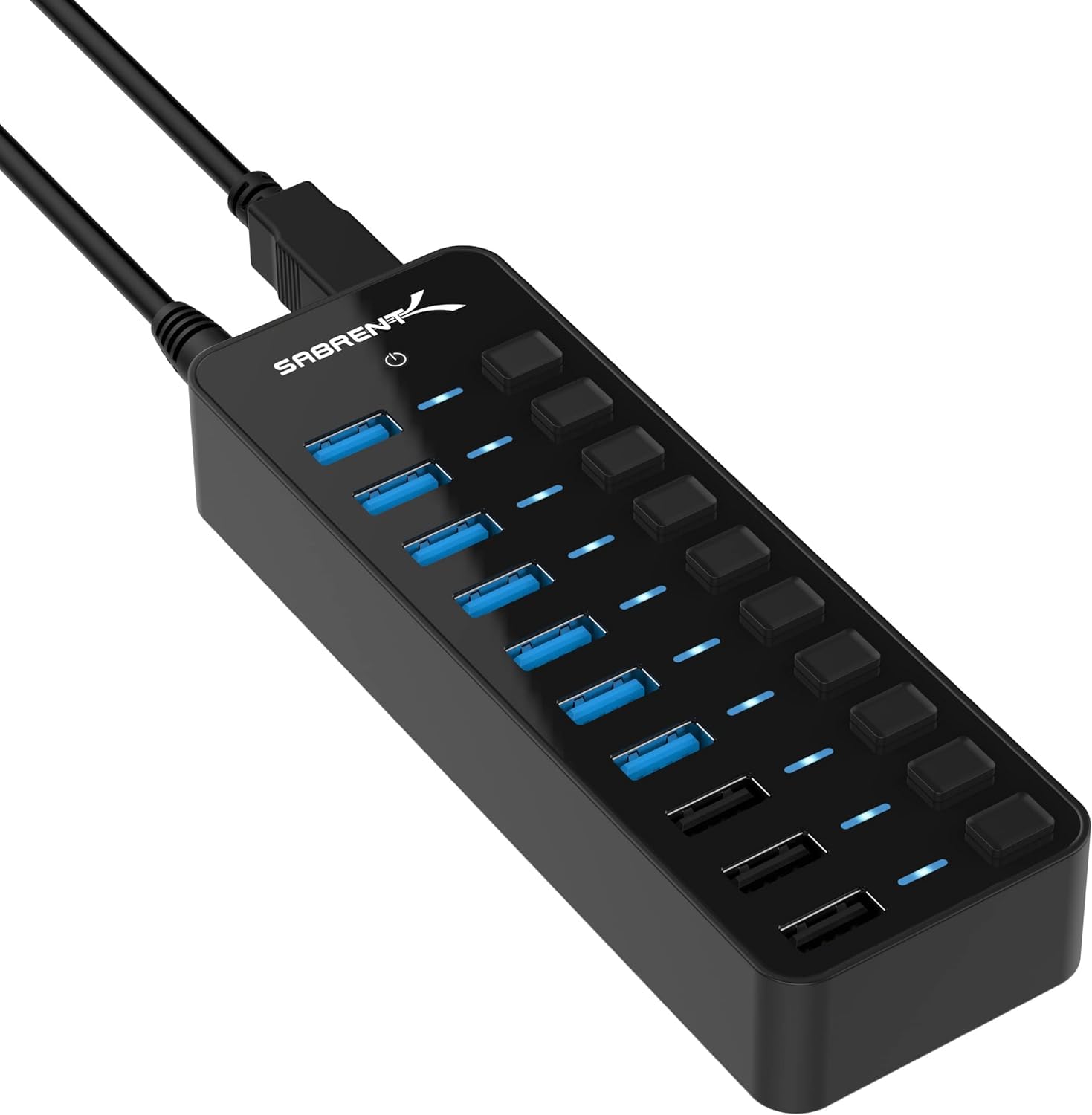
- Connects up to seven USB 3.0 data devices at once.
- Includes three dedicated charging ports with up to 2.4A per port.
- Comes with a 60W power adapter and per-port switches.
Best For: Desktop users who need several USB 3.0 data connections plus dedicated device-charging ports.
SABRENT 4-Port Powered USB 3.0 Hub (HB-UMP3)
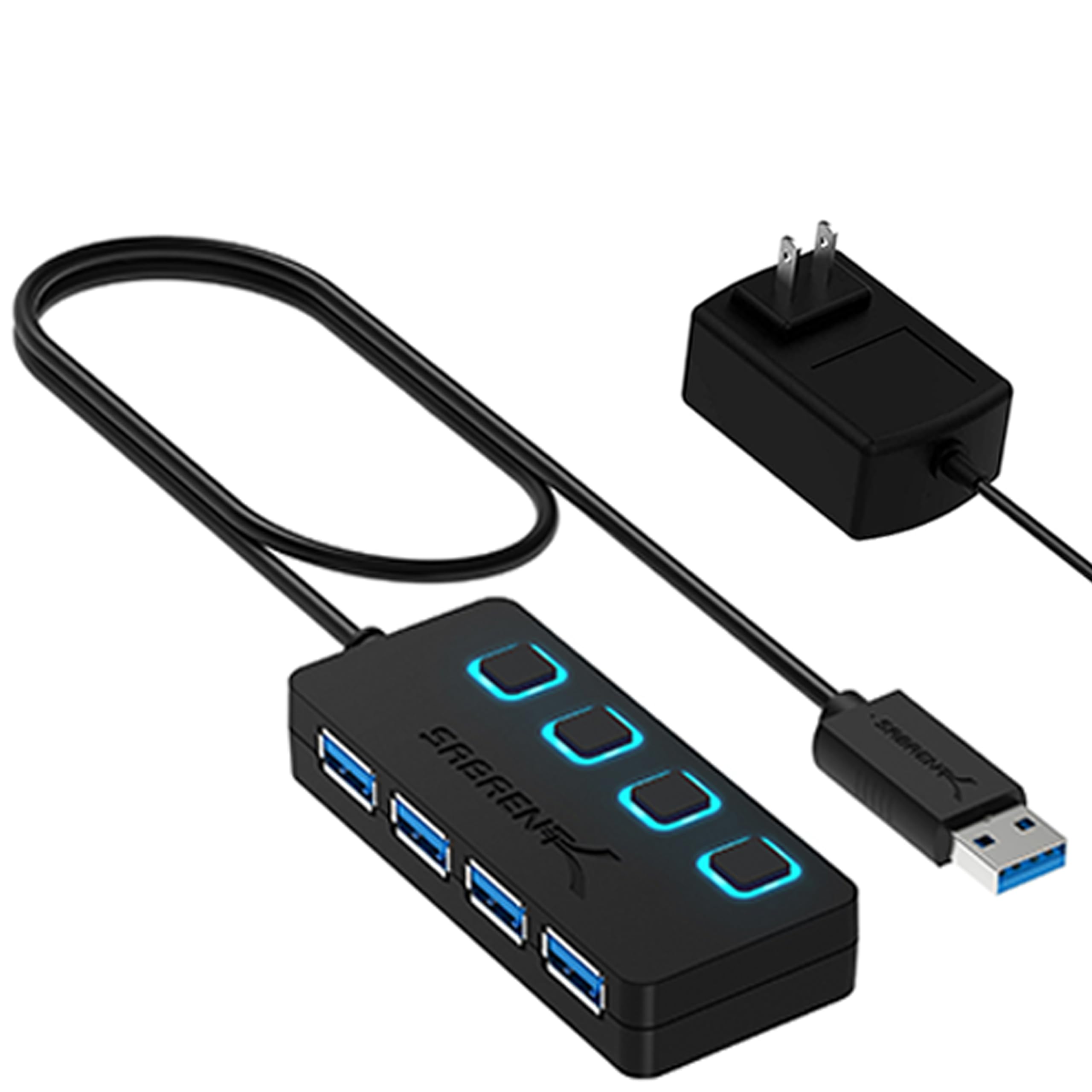
- Adds four USB 3.0 ports.
- Includes a 5V/2.5A power adapter.
- Each port has an individual switch and LED indicator.
Best For: Users who want a compact four-port USB 3.0 hub with a separate power adapter and individual switches.
Storage, Display, and Ethernet in One Dock
SABRENT USB-C Hub & SSD Enclosure, 6-Port Dock with M.2 SSD Slot, 90W Power Delivery, USB 3.0 & 2.0 Ports, 4K HDMI, RJ45 Gigabit Ethernet (HB-6PNV)
This USB-C hub combines several desk and travel connections in one aluminum unit. It has three USB-A ports, an HDMI 2.0 output for up to 4K at 60Hz, Gigabit Ethernet, and an M.2 slot that accepts SATA or NVMe SSDs in supported lengths.
Its integrated cable connects at 10Gbps, while the SSD connection runs at up to 5Gbps. USB-C power delivery passes through up to 90W, so you can connect a compatible charger while using the hub.
The broad feature set is useful, but the SSD is not included, and display output requires host support for DisplayPort Alternate Mode.
Best For: Laptop users who want display output, wired networking, and an internal SSD slot in one travel hub.
| Pros | Cons |
|---|---|
|
|
Choose this if one USB-C connection needs to handle an external display, wired network, peripherals, and storage expansion. Its M.2 slot supports both SATA and NVMe drives, but the hub itself does not supply the SSD.
Check the drive form factor and your laptop’s DisplayPort Alternate Mode support before buying. The other laptop hubs here offer simpler port mixes; this model is the specialist option for users who value Ethernet and internal storage alongside video.
Mobile Video Setup with Cold Shoe Mount
SmallRig 4-in-1 USB-C Hub with Cold Shoe Mount
SmallRig’s hub is designed around a phone-based shooting setup. It provides a PD charging port, one USB-C 3.1 interface, and two USB-C 2.0 interfaces, allowing a compatible phone to connect to audio gear and other accessories while charging.
The high-speed port supports transfer up to 10Gbps, and the product supports ProRes 4K at 60fps recording on compatible phones. Its cold shoe mount can attach to standard cold shoes or clamp to equipment, making it easier to incorporate into a rig.
At 38.3 g, it is compact to carry. Confirm that your phone and recording workflow support the functions you plan to use.
Best For: Mobile video creators who need USB-C ports, audio connections, charging, and a cold shoe mounting point.
| Pros | Cons |
|---|---|
|
|
This is the most specialized choice here: its connection layout and cold shoe mount suit a phone shooting rig, rather than a general laptop desk. It provides one faster USB-C data interface and two USB-C 2.0 ports, along with power delivery.
Before choosing it, check your phone’s port capabilities and whether your microphone, headphones, and storage accessories use compatible USB-C connections. Its compact weight favors a mobile setup, while buyers needing HDMI or USB-A should consider another hub.
A 7-in-1 Laptop Adapter with Card Readers
j5create USB-C Multi-Port Hub with Power Delivery with 4K HDMI/2 USB-A 5Gbps/PD 100W Charging SD&Micro SD/3.5mm Audio | for MacBook Pro&Air/iPad Pro/iMac/Surface/XPS/Thinkpad/Galaxy/and More(JCD373EC)
The j5create adapter brings several common laptop connections together: two USB-A data ports, HDMI, a 100W USB-C power delivery port, a 3.5mm audio jack, and SD and microSD card readers. The HDMI output supports resolutions up to 4K at 30Hz, making it suitable for adding an external screen when that refresh rate meets your needs.
Its plug-and-play design is intended for a broad mix of laptops and tablets, including MacBook, iPad Pro, Chromebook, and Surface devices. This is a practical port mix for work or media transfer, though the product information identifies a plastic enclosure and gives no Ethernet connection.
Best For: Laptop and tablet users who need HDMI, USB-A, card readers, audio, and USB-C charging in one adapter.
| Pros | Cons |
|---|---|
|
|
Pick this adapter when memory-card access and a 3.5mm audio connection matter as much as USB expansion. Its HDMI output tops out at 4K at 30Hz, so check whether that display mode suits your monitor and work.
The 100W PD port gives it a useful charging connection, though the actual charging setup depends on your compatible power source. Compared with hubs focused on Ethernet or many USB peripherals, this one favors a broad everyday selection of laptop ports.
Fast USB-C Data Ports and 4K at 60Hz
SABRENT USB C Hub 5-in-1, 10Gbps USB-A & USB-C Ports, Single 4K@60Hz HDMI, 100W PD Input, 80W Laptop Charging, Compact Aluminum Docking Station for MacBook, iPad, Laptops & Tablets (HB-TG5P)
This compact aluminum hub combines four high-speed data ports with HDMI and a dedicated USB-C power input. Two USB-A and two USB-C ports support transfers up to 10Gbps, while the HDMI output supports up to 4K at 60Hz with HDR10, Dolby Vision, and HDCP 2.3.
Connect a 100W USB-C charger to pass up to 80W to the laptop; the power adapter is not included. A backlit logo doubles as a power switch, and the integrated 60cm cable helps reach a convenient connection point.
It suits a laptop desk setup or travel bag, provided the host supports video over USB-C.
Best For: Laptop users who want multiple 10Gbps USB ports, 4K at 60Hz HDMI, and power pass-through.
| Pros | Cons |
|---|---|
|
|
Choose this for a laptop setup where fast USB storage and a 4K 60Hz display are both priorities. It provides four 10Gbps data ports, but charging requires your own 100W USB-C PD charger and delivers up to 80W to the laptop.
Check that your computer supports DisplayPort Alternate Mode for HDMI and MST if you need extended desktop mode. The hub focuses on high-speed data, video, and power rather than card readers or Ethernet.
Four USB-A Ports with Individual Controls
Knox Gear Powered 4 Port USB 3.0 Hub with Individual Switches | 4 × USB 3.0 Type-a Ports, Up to 5 Gbps Transfer, Individual on and Off Switches with LED Status Indicators, Plug and Play
Knox Gear’s hub adds four USB-A 3.0 ports for peripherals such as flash drives, keyboards, and mice. Each port has its own on/off switch and LED indicator, so you can control connections individually and see their power status.
Data transfer reaches up to 5Gbps with USB 3.0 devices, and it remains compatible with older USB 2.0 and 1.1 devices. Setup is plug and play with no driver installation.
It does not support charging, and computers with only USB-C ports need an adapter to connect. This straightforward design fits users who want to manage several data peripherals at a time.
Best For: Desktop and laptop users who want four USB-A connections with individual on/off switches.
| Pros | Cons |
|---|---|
|
|
This is a fit for users who need a small set of USB-A data connections and want to switch peripherals off individually. The 5Gbps USB 3.0 rate is useful for compatible data devices, while older USB gear is supported at its own standard.
It is not a charging hub, so choose another option if powering a phone is part of the plan. Also check the computer’s available connector: USB-C-only laptops need an adapter.
Flexible Placement with Individual Port Switches
SABRENT 4-Port USB 3.0 Hub with Individual LED Power Switches - Slim, Portable Design - 2 Ft Cable - Fast Data Transfer - Compatible with Mac & PC (HB-UM43)
The SABRENT HB-UM43 expands a computer with four USB 3.0 ports and places them at the end of a 2 ft cable. That makes it easier to position the hub for peripherals or reach a port that is awkward to access directly.
Each connection has an LED indicator and its own on/off switch, and the unit supports data transfers up to 5Gbps. It is plug and play, hot swappable, and compatible with USB 2.0 and 1.1 devices.
The key limitation is power: it is not for charging, so look elsewhere if you need device charging or USB-C ports.
Best For: Users who want individually controlled USB-A ports and extra cable reach from a computer.
| Pros | Cons |
|---|---|
|
|
The longer cable and separate switches make this model useful when the hub needs to sit within reach instead of directly against a laptop. Its four USB 3.0 ports support up to 5Gbps, with compatibility for older USB devices.
As with the Knox Gear hub, this is for data peripherals rather than charging. Choose it if the 2 ft cable and port-level control solve a desk layout problem; check that your computer has a compatible USB connection.
Simple USB 2.0 Expansion with Port Controls
SABRENT 4 Port USB 2.0 Data Hub with Individual LED lit Power Switches [Charging NOT Supported] for Mac & PC (HB-UMLS)
This four-port hub is a simple way to add USB 2.0 connections for compatible computers and devices. Individual on/off switches let you manage connected peripherals, and LED indicators show the power status of each port.
Its data rate reaches up to 480Mbps for USB 2.0, with backward compatibility for USB 1.1. It has plug-and-play setup and is hot swappable.
This is best suited to everyday accessories that do not need faster transfer speeds. Charging is not supported, so choose a powered charging hub if you need to charge connected devices.
Best For: Users connecting low-bandwidth USB peripherals who want four switched ports at a basic USB 2.0 rate.
| Pros | Cons |
|---|---|
|
|
Choose this for basic USB expansion where connected devices do not need faster transfer speeds. It offers a practical control setup with four ports and LED status indicators, but uses USB 2.0.
That makes it a better match for keyboards, mice, and similar accessories than frequent large-file transfers. Check the needs of any storage device before buying, and plan on a separate charging solution if connected devices need power beyond hub operation.
Many Ports for a USB 2.0 Desktop Setup
SABRENT 13 Port High Speed USB 2.0 Hub with Power Adapter and 2 Control Switches (HB-U14P)
With 13 downstream USB 2.0 ports, this powered hub is intended for a workstation that needs many USB connections in one place. Its listed data rate is up to 480Mbps, and it also supports full-speed and low-speed USB devices.
The unit includes a power adapter and supports plug-and-play, hot-swappable operation. Multiple hubs can be daisy-chained to connect additional devices, though that may make a setup more involved.
This large-capacity option is less suited to buyers who need faster transfers or a compact travel hub. Check the peripherals’ power needs and the included adapter arrangement for your setup.
Best For: Desktop users who need to connect many USB 2.0 peripherals through one host connection.
| Pros | Cons |
|---|---|
|
|
This hub suits a fixed workspace that has more USB peripherals than a compact four-port model can accommodate. Its 13 ports use USB 2.0, so prioritize connection count over faster transfers for storage.
The product includes a power adapter, and its size is worth checking against available desk space. If your priority is faster throughput or per-port power switching, compare the other powered hubs in this guide before settling on this high-capacity option.
Powered USB 3.0 Hub with Dedicated Charging Ports
SABRENT 10-Port USB 3.0 Hub, Individual Power Switches and LEDs, 3 Smart Charging Ports, 60W Power Adapter, for PC, Mac, Xbox, PS5, Laptop, Desktop, USB Devices (HB-B7C3)
This powered hub combines seven USB 3.0 data connections with three dedicated charging ports. The data ports support transfers up to 5Gbps, while the charging ports auto-detect and deliver up to 2.4A per port for phones, tablets, and other USB-powered devices.
It includes a 60W power adapter, and each port has an individual switch and LED indicator. That makes it a versatile choice for a desk with both computer peripherals and devices to charge.
Confirm which ports you need for computer data, since the three charging ports are dedicated for charging rather than counted among the seven data connections.
Best For: Desktop users who need several USB 3.0 data connections plus dedicated device-charging ports.
| Pros | Cons |
|---|---|
|
|
Pick this model if you want a powered desktop hub to handle both USB data peripherals and device charging. Its seven USB 3.0 connections are for data, and three separate ports charge at up to 2.4A each.
That division matters: it has ten ports overall, but not ten computer data ports. The 60W adapter and switches help organize a multi-device workspace.
Before buying, map your data devices and charging cables to the distinct port groups.
Four Powered USB 3.0 Ports
SABRENT 4 Port USB 3.0 Hub with Individual LED Lit Power Switches, Includes 5V/2.5A Power Adapter (HB-UMP3)
This four-port USB 3.0 hub includes a 5V/2.5A power adapter and individual power switches with LED indicators. It supports transfer rates up to 5Gbps for USB 3.0 devices, plus backward compatibility with USB 2.0 and USB 1.1 speeds.
Plug-and-play and hot-swappable setup keep installation straightforward. The separate adapter makes it a different kind of choice from unpowered hubs, but the record does not detail per-port charging output.
Treat it as a powered hub for USB peripherals and verify whether its power arrangement meets the requirements of the devices you plan to connect.
Best For: Users who want a compact four-port USB 3.0 hub with a separate power adapter and individual switches.
| Pros | Cons |
|---|---|
|
|
Consider this model when four ports are enough and you want a USB 3.0 hub with an included adapter and individual switches. It supports up to 5Gbps data transfer and accepts older USB devices, but the available information does not give a per-port charging rating.
Check the power requirements of your connected devices before relying on it for charging. For more total ports, compare other options; for a laptop dock with video, choose a USB-C model instead.
How to Choose Usb Hubs
How We Picked USB Hubs
This roundup prioritizes hubs that solve distinct connection needs: fast USB-C laptop expansion, display output and charging, phone-video rig connections, many desktop ports, and simple switched USB-A expansion. Each included product has a clearly documented role and enough detail to compare its ports, data capability, or power arrangement.
USB hubs vary widely in what a port does. A data connection, a charging port, and a power-delivery input are not interchangeable.
The selected options include straightforward data hubs as well as multiport adapters with HDMI, audio, Ethernet, card readers, or storage expansion.
Comparing USB Hubs by Ports, Speed, and Power
Start by counting the devices that need a computer data connection. Some hubs have four general-purpose ports, while the powered SABRENT model with ten total ports separates seven USB 3.0 data connections from three dedicated charging ports.
The 13-port model favors a larger count but uses USB 2.0, while the selected high-speed laptop dock offers four 10Gbps data ports.
Charging also needs a closer look. A hub may pass power to its host laptop, charge peripherals from dedicated ports, or simply use an adapter for its own power.
For example, the 5-in-1 USB-C hub passes up to 80W to a laptop from a compatible 100W charger, while the 10-port desktop unit specifies up to 2.4A per dedicated charging port. Match that arrangement to your devices and chargers.
| Product | Standout features | Best for |
|---|---|---|
| SABRENT USB-C Hub & SSD Enclosure (HB-6PNV)Check Price |
| Laptop users who want display output, wired networking, and an internal SSD slot in one travel hub. |
| SmallRig 4-in-1 USB-C Hub 4598Check Price |
| Mobile video creators who need USB-C ports, audio connections, charging, and a cold shoe mounting point. |
| j5create USB-C Multi-Port Hub (JCD373EC)Check Price |
| Laptop and tablet users who need HDMI, USB-A, card readers, audio, and USB-C charging in one adapter. |
| SABRENT 5-in-1 USB-C Hub (HB-TG5P)Check Price |
| Laptop users who want multiple 10Gbps USB ports, 4K at 60Hz HDMI, and power pass-through. |
| Knox Gear Powered 4-Port USB 3.0 HubCheck Price |
| Desktop and laptop users who want four USB-A connections with individual on/off switches. |
| SABRENT 4-Port USB 3.0 Hub (HB-UM43)Check Price |
| Users who want individually controlled USB-A ports and extra cable reach from a computer. |
| SABRENT 4-Port USB 2.0 Hub (HB-UMLS)Check Price |
| Users connecting low-bandwidth USB peripherals who want four switched ports at a basic USB 2.0 rate. |
| SABRENT 13-Port USB 2.0 Hub (HB-U14P)Check Price |
| Desktop users who need to connect many USB 2.0 peripherals through one host connection. |
| SABRENT 10-Port USB 3.0 Hub (HB-B7C3)Check Price |
| Desktop users who need several USB 3.0 data connections plus dedicated device-charging ports. |
| SABRENT 4-Port Powered USB 3.0 Hub (HB-UMP3)Check Price |
| Users who want a compact four-port USB 3.0 hub with a separate power adapter and individual switches. |
Choosing a USB-C Hub for Video and Travel
A USB-C hub with HDMI can make a laptop easier to use with an external display, but the host device must support video over USB-C. Check whether DisplayPort Alternate Mode is supported before choosing an HDMI hub.
Then compare the maximum resolution and refresh rate: the selected j5create adapter supports up to 4K at 30Hz, while the selected SABRENT 5-in-1 hub supports up to 4K at 60Hz.
For travel, an integrated cable and a compact aluminum body can reduce setup clutter. If you need wired networking or a drive inside the hub, the SABRENT SSD dock adds Gigabit Ethernet and an M.2 slot.
Keep in mind that the SSD is a separate purchase, and the dock’s HDMI output also needs compatible host video support.
USB Hubs for Desktop Control and Large Setups
Individual power switches are useful when peripherals can stay connected but do not need to remain active. The Knox Gear and SABRENT four-port hubs give each port separate control, while the 13-port USB 2.0 model focuses on quantity for a fixed workstation.
Consider cable placement, adapter needs, and whether you want every port to transfer data or some dedicated to charging.
Choose the data standard around how you use your devices. USB 3.0 or 10Gbps ports suit faster storage workflows, while USB 2.0 can be adequate for low-bandwidth accessories such as a keyboard or mouse.
A hub does not make an older device transfer faster than its own interface allows.
Which USB Hub Fits Your Setup?
For a laptop dock with Ethernet and expandable storage, consider the SABRENT HB-6PNV and confirm the SSD and host-video requirements. For fast USB-C data plus a 4K 60Hz display, the SABRENT HB-TG5P is a better match if you already have a compatible charger.
Choose the j5create adapter when card readers and audio matter alongside HDMI and charging.
For a phone video rig, the SmallRig hub offers a cold shoe mount and USB-C connections. For desktop devices, choose between the 10-port powered unit with dedicated charging connections, the 13-port USB 2.0 hub for connection count, or a four-port switched model for simpler control.
Check the computer connector, device power needs, and display support before making the final choice.